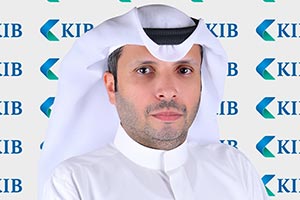
 Kuwait, 28 July 2026: Kuwait International Bank (KIB) confirmed that the administrative and commercial real estate market in Kuwait City continues to maintain its strong investment appeal, supported by limited supply and sustained demand for prime locations with high economic activity, particularly along major streets. This has supported the stability of real estate asset values, reflecting the strength of the sector’s underlying market dynamics. In this context, Mishari Al-Boualayyan, Head of the Real Estate Appraisal Department at KIB, said that prices for 500-square-meter land plots designated for administrative and commercial use vary depending on location and the permitted building ratio. Al-Boualayyan noted that prices for vacant land range from KD 7,000 to KD 13,750 per square meter on some of the capital’s most prominent streets, including Ahmad Al-Jaber, Fahad Al-Salem, Jaber Al-Mubarak, Mubarak Al-Kabeer, and Abdullah Al-Mubarak. Properties with higher permitted building ratios and strategic locations command higher prices, he stated. Al-Boualayyan added that investment yields in these areas currently range between 6% and 7.25%, varying according to achieved rental levels, building quality, parking availability, and the extent to which the property is suitable for various administrative and commercial activities. Al-Boualayyan also indicated that Fahad Al-Salem Street continues to attract investors thanks to its strategic location and its concentration of many financial institutions and major companies. Meanwhile, Ahmad Al-Jaber, Jaber Al-Mubarak, and Mubarak Al-Kabeer streets continue to maintain solid demand levels due to sustained administrative and commercial activity in these areas. He explained that the market value of administrative and commercial land is not determined solely by location and the permitted building ratio, but is also influenced by several key factors, most notably the level of supply and demand in the market, occupancy rates in buildings, the types of economic activity prevailing in the area, the overall state of the local economy, and profit rates, which play an important role in guiding investors’ decisions. Al-Boualayyan emphasized that the availability of parking has become a key factor in the success of administrative and commercial properties and in enhancing their ability to attract tenants and investors, given its direct impact on occupancy rates, rental values, and ease of access to the property. He added that the initiatives being implemented by the state in partnership with the private sector to develop multi-storey parking facilities in vital areas contribute to supporting economic activity, improving infrastructure, and strengthening Kuwait City’s competitiveness as a major financial and commercial hub. The market is currently witnessing a shift in tenant trends, with growing demand for small and medium-sized administrative spaces ranging from 30 to 50 square meters, Al-Boualayyan noted. This is being driven by startups, entrepreneurs, and freelancers seeking to rationalize operating costs and benefit from more efficient spaces. The trend has had a positive impact on occupancy rates in administrative and commercial buildings, prompting some property owners to redivide administrative spaces in line with market needs and to achieve better investment returns, he said. Al-Boualayyan further explained that administrative and commercial properties in prime locations with strong operational specifications can maintain their market value and generate stable returns over the long term, even during periods of change or volatility in real estate markets. Concluding his remarks, Al-Boualayyan emphasized that Kuwait City’s administrative and commercial real estate sector continues to enjoy strong fundamentals that support its stability and sustained growth. This is underpinned by the capital’s status as a major financial and commercial hub in Kuwait, which further enhances the investment appeal of high-quality administrative and commercial real estate assets.
|

 RSS Feed


